
(No caption)
This is the second of two selections from a 14-page essay, "The Kidnapped Children of Detroit," by a third-generation Detroitrer writing under a pen name. It appears in "Voices from the Rust Belt," published last week. See Part One.
By Marsha Music
Some former Detroiters are pulled back to their old neighborhoods -- some intact, some bedraggled, some where the old home is completely gone: the decay and destruction an affirmation of their parents' obviously right decision to leave, so long ago.
I wonder if, sometimes, they suspect that decision itself, multiplied across Detroit, was at least part of the cause of all the mess here now. That maybe the mass flight. the leaving of property all over town, the years of being egged on by whispers and Realtors to cross 8 Mile, was all part of a nasty, self-destructive Monopoly game involving real properties and real lives.
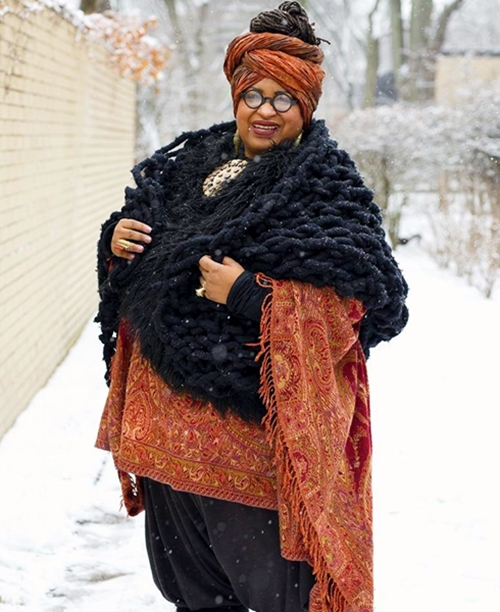
Marsha Music: "Detroit never left -- but three generations did." (Facebook photo)
I wonder what might have happened in Detroit if there had never been this flight -- if whites had held on and resisted the racial manipulation; if blacks had been able to push back the plague of unemployment, drugs and crime; if we had been able to live in Detroit, all at one time. . . .
— — — — — — — — — — — — — — — —
Like the movement of blacks across the city after the destruction of Black Bottom -- a predominantly black neighborhood razed in the early Sixties in the name of urban renewal -- this was an unprecedented transfer of community. Suburban parents did their best, as they understood it, to build better lives. But fear of a black city made my friends Detroiters in exile.
Folks as the question: Will Detroit come back? Well, Detroit never left -- but three generations did.
Today, regardless of the city's efforts at redevelopment, most know that they will never again live kin the city of their affection. Most of the old neighborhoods are much too far from livability for them, and the city's core and urban lifestyle holds no appeal for those accustomed to suburban sprawl.
But more and more of the children and grandchildren of the Kidnapped Children are finding their way home. Despite ghost-town metaphors, "blank slate" pronouncements" and prairie-land descriptions of Detroit, they find the city already occupied, and these strangers in a strange yet familiar land must learn to share it with those who held on.
Younger generations of whites from the suburbs, who don't have their forebears' fear of the city, are moving in the opposite direction, proudly proclaiming their Detroit provenance and reveling in their new urban life. Some of them recreate suburban segregation in the heart of the city; they want life in Detroit -- without Detroiters. But many more look to the city as the most exciting place in the world to live in diversity.
— — — — — — — — — — — — — — — —
As the children and grandchildren of the Kidnapped Children make their way to the city, I believe that it is the responsibility of the rest of us -- those who, like me, never left -- to welcome them; to tell our new residents the real city narratives, to share the truths from all sides of what happened here.
There are deep schisms that never should have been, that were orchestrated by self-serving interests; we must work to mend these wherever possible. Our new residents have a contagious earnestness, energy and hopefulness, reminiscent of the movements of our past, and there's a difference between their sincere efforts for change and the machinations of those who would manipulate the urban crisis to their own benefit, casting us aside like flotsam in the name of progress.
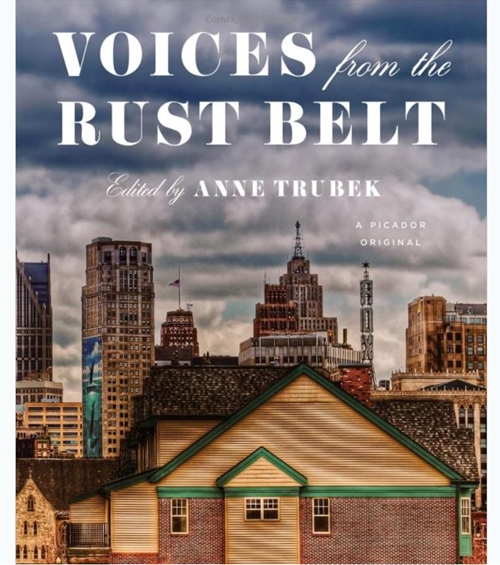
The 256-page paperback came out April 3.
(Illustration by LeeAnn Falcinni)
Yet it is likewise the charge of our new Detroiters to acknowledge and respect those already here -- to actually see longtime residents, for we are not invisible. Our new residents must learn from our history and experience; they must work alongside our earlier residents and their children in Detroit's renewal, for they are the bedrock of the redeveloped city and the nexus of its future.
Let us figure out -- this time -- how to live together, so that more children and grandchildren of the Kidnapped Children can come home to live in the city, so that more of our children and grandchildren might also be part of a truly new Detroit. Young people come to be freed from their lives of suburban isolation and the crippling divisions of this region; they want to be part of a new urban reality.
It is true that some say they have come to save Detroit, but I say, they come to Detroit to be saved.
© 2018, Picador
How to buy 'Voices from the Rust Belt'
♦ Pages Bookshop, 19560 Grand River Ave. ($16)
♦ Barnes & Noble: $14.50 and shipping; $9.99 Nook


