
Chatgpt generated for Deadline Detroit
We asked AI (Chatgpt) to write a column on the psychological impact of another losing season for the Detroit LIons fans.
By Chatgpt
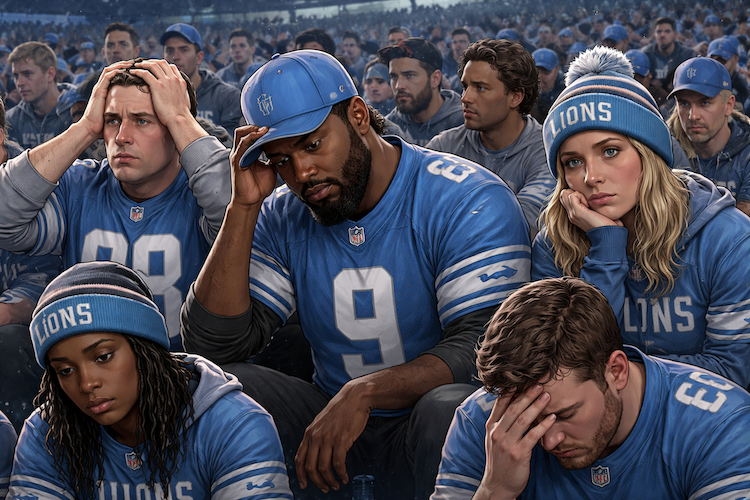
Disappointed fans (Chatgpt generated for Deadline Detroit)
For Detroit Lions fans, missing the playoffs isn’t just another disappointing sports outcome. It lands with a familiar thud in the gut—a mix of frustration, sadness, and weary resignation that feels heavier precisely because it’s been carried for so long.
This season teased something different. For stretches, the Lions looked like a team capable of beating anyone on a given Sunday. That promise is what makes the letdown sting. When the playoffs slip away, fans aren’t just mourning a few lost games; they’re mourning the version of the future they briefly allowed themselves to believe in.
Psychologists have long noted that sports fandom is a form of identity. For many Detroiters, rooting for the Lions isn’t a hobby—it’s a shared language, a family tradition, a civic bond. The team becomes a stand-in for resilience, hope, and the idea that perseverance eventually pays off. When the Lions fall short, it can feel like a personal failure, even though fans had no control over the outcome.
That emotional investment is amplified in cities like Detroit, where sports teams often mirror the community’s own struggles and aspirations. The Lions have been there through economic downturns, population loss, and years of national punchlines. Fans stuck around not because it was easy, but because loyalty itself became a point of pride. To give up on the Lions would feel, to some, like giving up on the city.
There’s also the psychology of scarcity. When success is rare, hope becomes precious. A playoff berth isn’t just a postseason opportunity—it’s validation. It says the suffering meant something. When that moment is taken away, fans aren’t starting from neutral; they’re dropping from emotional altitude.
Yet, paradoxically, this same pain is why fans keep coming back. The lows sharpen the highs. The shared disappointment becomes communal therapy—talk radio debates, barroom autopsies, gallows humor on social media. In Detroit, heartbreak is processed collectively.
Missing the playoffs hurts because Lions fans care deeply, perhaps too deeply, but that depth of feeling is also what sustains the franchise. Long after the final whistle, fans will still wear the gear, argue about next year’s fixes, and convince themselves—again—that this time might be different.
Because being a Lions fan isn’t about avoiding pain. It’s about believing, against all evidence, that hope is still worth it.


