
Photo: Screenshot from Freep video
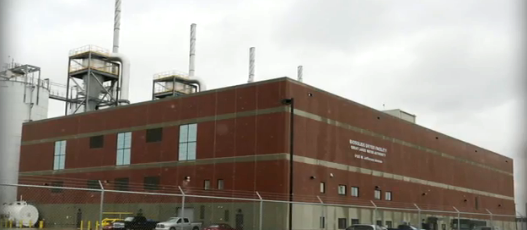
Photo: Screenshot from Freep video
A $143-million facility to convert human waste from the Detroit Wastewater Treatment Plant into marketable fertilizer has exceeded its permitted emission levels of harmful sulfur dioxide since it began operating in April 2016, the Detroit Free Press reports.
It means more harmful emissions are pouring into an area of southwest Detroit that already has the most polluted air in Metro Detroit, the Freep reports. The facility, which is operated by a private, for-profit company in partnership with the water authority, is just off of West Jefferson.
Keith Matheny of the Freep reports:
Short-term exposures to sulfur dioxide can harm the human respiratory system and make breathing difficult, according to the EPA. Children, elderly people, and those who suffer from asthma are particularly sensitive to its effects. High concentrations of sulfur dioxide in the air also lead to the formation of other sulfur oxides, which in turn can react with other compounds and form small particles, contributing to particulate matter pollution. These tiny particles can penetrate deeply into sensitive parts of the lungs and cause additional health problems...
Residents in the area face a polluting gauntlet of steel mills, coal-fired power plants, a major garbage incinerator and factories — and it shows in their respiratory health. Detroit’s hospitalization rate for asthma is more than three times the rate for Michigan as a whole, according to the state Department of Health and Human Services.
Suzanne Coffey, interim chief operating officer for wastewater with Great Lakes Water Authority, played down the issue, telling the Freep the facility has not produced a "significant environmental impact." She said the private company, the New England Fertilizer Co., or NEFCO, is working to correct it. A consent order between the state Department of Environmental Quality (DEQ) and NEFCO allows the company until Jan. 1, 2018, to resolve its permit noncompliance.