
Willie Horton with other dignitaries (Detroit PAL photo)
Yes, the sacred ground once trampled on by some of baseball's greatest players was sold for 100 pennies or four quarters or 20 nickels or a dollar bill.
Michael Betzold and Steve Neavling write in Motor City Muckraker:
For the past 16 years, the city of Detroit has rejected numerous proposals to restore or reuse the historic baseball field of Tiger Stadium.
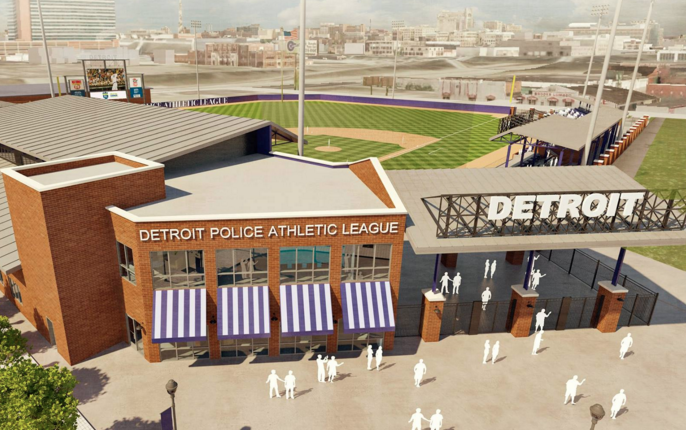
Then last month, with little to no public input, the city agreed to sell the field – one of the city’s most storied sites – for $1 to the Detroit Police Athletic League (PAL), which has stirred controversy over its plan to cover the dirt and grass with artificial turf.
In November, the Detroit City Council agreed that the city’s Detroit Economic Growth Corporation (DEGC) would lease the land – not sell it – to PAL for youth sports at the corner of Michigan and Trumbull.
Because the public is generally unaware of DEGC meetings, the decision to sell was made last month without input from people who have long opposed PAL’s plan. The DEGC approved the new arrangement to unscramble a zoning snafu the city created by dividing up the site into separate parcels.
The unexpected move also allowed PAL to proceed with today’s groundbreaking for a new 2,500-seat stadium, headquarters and banquet hall. Protesters are planning to attend the event to voice concerns about artificial turf.
On Wednesday, former Tigers slugger Willie Horton was at the site with other dignitaries for the christening of the field, which is now called "The Willie Horton Field of Dreams."
DEGC spokesman Bob Rossbach described the sale as a victory that preserves the ballpark and allows thousands of children to use the site, Motor City Muckraker reports.
The city over time rejected some serious offers. Betzold and Neavling write:
But PAL wasn’t the only group interested in preserving the field. Between 2009 and 2012, the city rejected three different offers by the Old Tiger Stadium Conservancy, which wanted to retain the grass and keep the field open to the public. The group committed nearly $13 million in cash, secured a $3 million federal grant that is now being awarded to PAL, and later joined with two local nonprofits in another plan and finally offered to lease the land to build a museum. After getting no traction for those proposals, the conservancy joined with PAL in 2014 to support this plan – though not without dissent – and city leaders quickly green-lighted it.


