
File photo
Not staying six feet from the shopper in front of you in the checkout line? Trying to get in a little playground ball when no one's watching? You may be dimed out by a security camera.
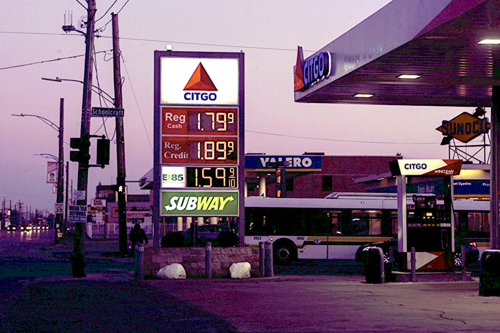
Project Green Light Detroit green light atop the price sign. (File photo)
In Detroit, police are monitoring security cameras outside convenience stores for crowds. In suburban Bloomfield Township, drones are hovering over golf courses and playgrounds to watch for large groups.
And when Michigan’s economy reopens after stay-at-home orders designed to slow the coronavirus pandemic, specialized cameras in some shopping centers will measure the distance between customers in checkout lines.
Wow, comforting.
Technology is expected to play a crucial role in tracking and combating the highly contagious virus until researchers develop a vaccine. And it’s prompting a familiar question: How much freedom are Michiganders willing to trade in exchange for increased safety?
Yes, that's the question. And based on what happened after 9/11, the answer is: A lot.
However, increased surveillance may be the only way to effectively combat Covid-19, until a vaccine or more effective treatments are available. Many of the strategies discussed today -- contact tracing, for one -- rely on a fair amount of privacy invasion. And things like Project Greenlight cameras, initially sold as a way to keep the city safer from violent crime, may end up snitching on people for not-even-crimes like failing to maintain social distance.
The drone in Bloomfield Township, no one should be surprised to learn, was "donated by DJI Enterprise, the world’s largest drone manufacturer, which has also given them to the Battle Creek Police Department, Kent County Sheriff’s Office and 40 other police, fire and public safety agencies across the country to use for COVID-19 response."
The first taste is always free.


