
Detroit public affairs commentator Karen Dumas has a message that labor organizers, fast-food workers and their clergy supporters won't like.
She recognizes that $7.40 an hour "is far from being generous or enough for a family to sustain themselves," but sees walkouts demanding higher pay as misdirected. "The outrage and energy could be better aimed at addressing the problem of low-wage employment," the former aide to Mayor Dave Bing writes in Bridge Magazine.
"A myopic approach to solving the outcomes of otherwise complicated and overlooked contributing factors are not a real solution," Dumas says bluntly. "A one-solution approach to a problem with myriad factors in the end solves nothing."
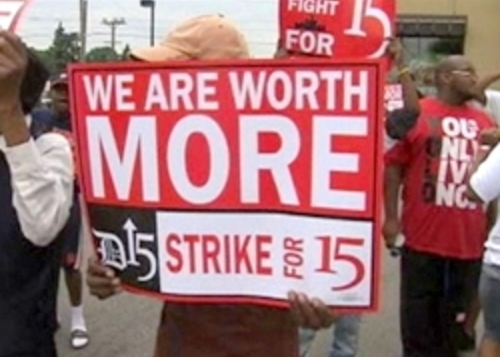
Workers protest July 31 outside a Taco Bell in Warren. (Fox 2 photo)
The root problems, as she defines them under a "Misplaced Rage" headline, include interrupted high school educations and applicants unprepared for higher-paying jobs.
As a result, we have too many residents who are undereducated and under- or all-out unemployable. This problem does not justify raising the wage to meet these compromised qualifications. To do so would be a false seal of approval for failure and lack of training both by the person and a system that should help prepare them.
To raise the minimum wage to a level comparable to those who are better-educated and with a higher skill set would send the wrong signal. It says education isn’t necessary and job readiness isn’t needed. It invalidates the connection between preparation and quality of life.
She notes that while fast-food prep or counter work can be a path to management, they're generally not "intended to be permanent employment."
Fast-food restaurants have long been a place for teens to find their first jobs, or for seniors looking to remain active after retirement. They offer low-skilled positions with a wage commensurate with the requirements, or lack thereof. . . .
While tthe energy and efforts invested in increasing the wage to $15 are admirable, I believe those same efforts would be better-served by working to address the factors that help place many workers into positions with few options and no growth potential. It starts by having a candid discussion and very loud call to action.
That discussion needs to be about the reality of education, preparation and options. Either you prepare to succeed, or you don’t prepare and fail.
Instead of walkouts and protests outside burger, chicken and taco shops, Dumas suggests focusing on changes with greater impact.
How about a rally for increased graduation rates, parent-teacher conference attendance, and higher, not skewed, performance scores for math, reading and science? Let’s see higher interest and participation in the paid apprenticeships offered by local unions. And let’s have the discussion about vocational training for those for whom college isn’t a fit.
Let’s take a look at even the government cracks that seem to widen, thus enveloping too many.


