
(No caption)
The writer, a past executive director at Preservation Detroit, has an urban studies degree from Wayne State. She's currently administrator and outreach coordinator at Transportation Riders United.
By Claire Nowak-Boyd
As General Motors prepares to end production at the Detroit-Hamtramck Assembly Plant and four others, an important side concern arises here that has nothing to do with making vehicles.
The Poletown Plant was built in 1981. Eminent domain procedures were used to buy about 1,400 households, about 140 businesses, 16 churches, two schools, and a hospital, changing thousands of lives. It erased one of Michigan’s largest integrated communities forever.

Beth Olem Cemetery has graves dating to 1848. GM plant is in the background.
(Photo by Claire Nowak-Boyd)
It compounded the physical division that I-94 had already plunged between the Polish neighborhood in that part of Detroit and that in Hamtramck, part of the story of why Chene and the surrounding Recovery Park neighborhood have significant vacancy (though businesses, churches, and occupied homes do remain).
The tremendous, forced sacrifice of thousands of Detroiters for such a short-lived economic gain raises serious questions about the efficacy of relying on mega-projects to “save” the city, as opposed to supporting current economic networks, boosting small entrepreneurs and creating a broad, distributed base of neighborhood projects.
One site managed to evade legal condemnation and the bulldozers: Beth Olem Cemetery. With burials dating back to 1848, it's the oldest Jewish cemetery in Michigan. It has about 1,400 graves.
Beth Olem stayed in place as the surrounding neighborhood was smashed apart and hauled away so an auto factory could be built around it. Now it's open to the public only two days a year around Passover and Rosh Hashanah, for a few hours at a time,making visits challenging for relatives.
Having visited several times myself, getting into Beth Olem takes patience. I've heard of people trying and failing to enter.
When I heard Monday's plant closure news, my first thought was for Beth Olem. What will its future look like?
If GM is truly not going to use the site anymore, it needs to remove or neutralize contaminants and sell it to a responsible owner. In an ideal world, they’d return land to those displaced to build the plant less than 40 years ago.
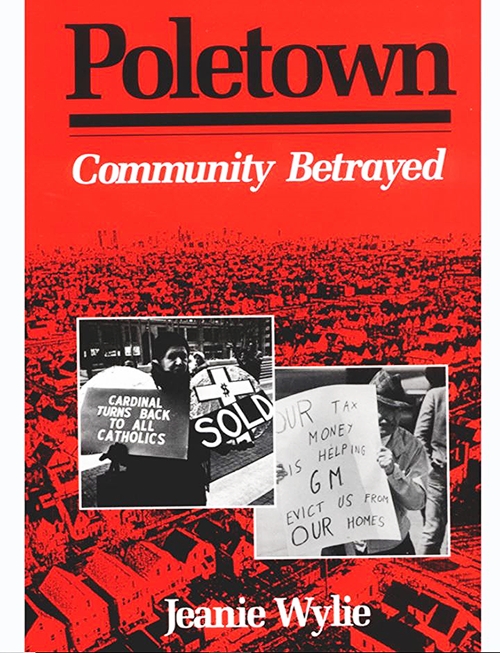
The University of Illinois Press reissued this book in 1990.
That is unlikely. But displaced people and their descendants should be a big part of planning for whatever is next there, and they should receive community benefits. There also should be easy access to visit Beth Olem.
Shorter term, though, what does it look like for Michigan’s oldest Jewish cemetery to be surrounded by a hulking plant where nothing is made? General Motors must commit to a binding plan to take care of this vital historic asset to prevent it from being vandalized and looted.
Historically, vandalism and destruction of Jewish cemeteries has been a powerful symbol of anti-Semitism, a way to sow despair in the hearts of the community. In a time when there have already been sad stories of toppled and broken headstones in Jewish cemeteries, we cannot afford to throw the fate of another such site to the winds of scrapping and theft that many of us Detroiters know all too well.
Beth Olem must be watched over and protected for the future.
Related coverage today:
Poletown, Dead For 37 Years, Is Mourned Again with GM's Closing of Hamtramck Plant


