
(No caption)
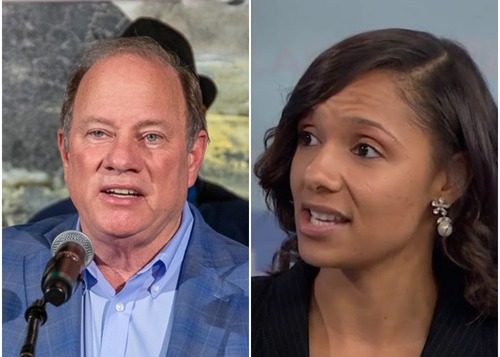
Duggan and Sheffield
Close watchers of the last eight years of Detroit City Council know there was little pushback — at least, publicly — on Mayor Mike Duggan's wants. And rarely did councilmembers craft proposals that conflicted with his vision for the city.
But the 9-member body's new president, Mary Sheffield, a 34-year-old progressive, says that's about to change.
In a Detroit News interview about the more "proactive" council she intends to lead, Sheffield outlines a series of policy goals, some which stand in contrast with the mayor's.
They include:
• Dismantling the city's Land Bank and returning its tens of thousands of properties to city control. The Land Bank is currently governed by an unelected board led by a mayoral appointee and is often criticized as making opaque and unfair decisions about who gets to purchase property.
Sheffield tells The News her team has begun to gather information on the city's ability to phase it out over the next few years.
The Duggan administration wants to keep the agency as is, saying the Land Bank has increased the ease with which residents can purchase property. It has done so by clearing title and bringing most of Detroit's abandoned houses and lots under one owner, but it's not clear how that would change under another owner.
• Compensating Detroit homeowners who were reportedly overtaxed by a collective $600 million, including with tax credits, which the Duggan administration has said is not legally possible. Sheffield plans an ordinance that would provide additional options like priority for home improvement grants and other programs the city already offers.
She also wants to ensure the tax bills on the city's lower-value homes are not inflated, as academic research has suggested in recent years. Duggan calls "any suggestion that taxes are illegally high today ... utter nonsense."
• Creating a "Right to Counsel" ordinance that would ensure legal services for the tens of thousands of Detroiters who face eviction annually, with the exception of during a pandemic-era moratorium.
• Basing what qualifies as affordable housing on the city's median income, versus the region's. Currently, developers receiving city incentives are required to keep 20 percent of units affordable for people earning up to 80 percent area median income. The area, however, is metro Detroit, meaning people earning about $40,000 per year qualify for affordable housing, when the average Detroiter earns far less.
Sheffield, who was previously in a progressive minority on council, now has six new members to work with. Some have indicated they too will pursue progressive initiatives, including a universal basic income pilot program and hotels for the homeless. Even a more center-leaning newcomer supports tax credits for the overtaxed.


