
A rendering of some of the proposed housing in Brush Park.
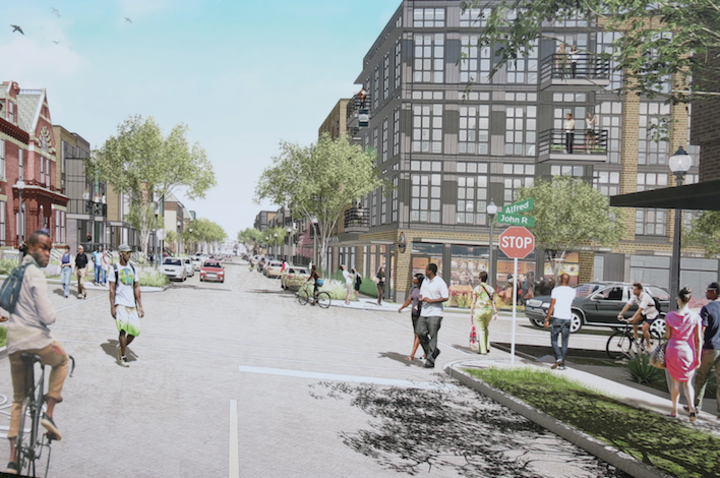
A rendering of some of the proposed housing in Brush Park.
The 2008 recession showed what happens when developers build too many homes and condos. People get laid off from their jobs, mortgage money dries up, demand evaporates and housing sits vacant.
In Detroit, there's a housing boom. Last week alone, four fresh projects with potentially 600-700 units took big steps toward becoming reality, writes John Gallagher of the Free Press. That's on top of the 1,000 or so already under construction.
With that in mind, Gallagher asks experts if Detroit risks overbuilding:
First, I asked Arthur Jemison, director of Detroit’s Housing and Revitalization office, about how many potential renters and buyers really want to move downtown. With 1,000 rental units nearing completion and a couple thousand more in the pipeline, we’ve adding a lot of capacity in a short time.
“I don’t think I’m worried about overbuilding yet but I think about that a lot,” Jemison told me, suggesting that we may be another 500 or so units away from satisfying current market demand. If that’s true, then some of the planned projects may not fill up as fast as their developers hope.
Ask other experts and you’ll hear different estimates about the level of demand. But, of course, nobody really knows how deep this demand will go. It may be that five years ago there were 500 potential new residents looking for apartments, but now, with downtown and Midtown so hot and Quicken Loans and other employers hiring staffers every day, the number of people hoping to move downtown may have soared into the thousands.
But if demand runs hot right now, with rents soaring and most apartment buildings full and many running waiting lists, some caution may still be called for. Overbuilding has led to more than one bubble in the nation’s real estate markets, including the overbuilt office and hotel markets in metro Detroit in the 1980s that led to widespread losses. And overbuilding was a contributing factor in the collapse of the financial markets that tipped the nation into the Great Recession.


