
(No caption)
Ken Gross, an attorney with Thav Gross in Bingham Farms, hosts of "Law and Reality" from noon to 1 p.m. Tuesday on WCHB Saturdays from 9 to 10 a.m. on WDFN and at 11 a.m. Sundays on TV20.
By Ken Gross
When we began the "Financial Crisis Talk Center" in 2008. the radio show’s purpose was to focus on the plight of individuals rather than just covering the story about the crisis.

Ken Gross
Now the Flint water disaster makes national news, but I haven't seen coverage focusing on what homeowners there should do.
All the focus is on the governor, the state Department of Environmental Quality and the resignation of Susan Hedman, EPA regional administrator. I prefer is to focus on the people.
Every morning, when I brush my teeth, shower and pour my coffee, I now think: “What would I do if I was living in Flint on city water?”
My answer is easy – my blood would curdle with anger, I would forever distrust government officials and then I’d focus on how I can improve my situation. It is not just a health crisis. It's also a financial crisis.
Who is going to buy a home in Flint or open a business? Would anyone reading this like to join me for dinner at a Flint restaurant?
When the financial crisis occurred, we developed what I call The Tools of Financial Crisis Management” which focus on strategies to exit business and personal property that is hopelessly underwater rather than allowing the “toxic” asset to become a lingering liability. The goal is to preserve future income for you and your family.
Residents who are victims of this total breakdown in governmental responsibility should gather their wits and formulate carefully adapted strategies to minimize the damage.
The global financial crisis had many lessons. One of the clearest is that we cannot rely on government to right the wrongs we suffer at their hand.It doesn’t happen, though government may try.We'll see substantial assistance at both the Federal and State level to address the health issues – but when it comes to the financial issues, it’s going to be a tough road.
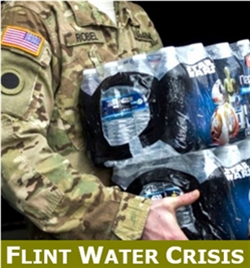
There are solutions, however.
Utilizing bankruptcy to exit property that is underwater is one of several viable options. You discharge the monetary obligation to pay the mortgage. You can then continue to pay on the property if you wish to keep it – or you can walk away without the risk of being sued.
After discharging the obligation, you may be able to obtain a loan modification, inclusive of principal reduction on the mortgage that will make the property financially worthwhile to keep – while at the same time reserving your right to leave. If the government solves the water problem, the real estate market may return to viability and you would have a property worth keeping and perhaps with greater equity than had the disaster never occurred.
Don’t get me wrong. I’m not seeing this as a way of profiteering from the disaster, but I do see this as one in which the smart play is to investigate your options to maximize your chance to ameliorate the loss that has been bestowed upon you.
To learn more, see "Law and Realit" on Channel 20 at 11 a.m. Jan. 31. The topic is “The Flint Disaster – What are Your Options?”


