

(No caption)
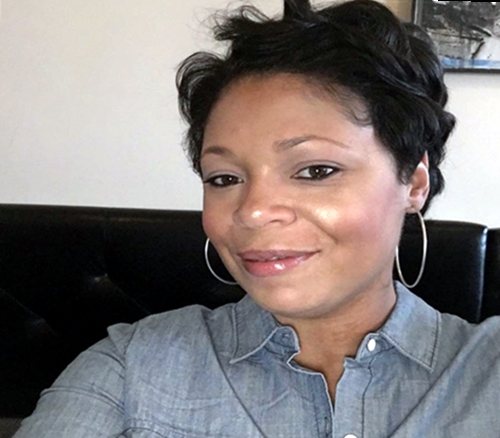
Urana McCauley: "I refuse to let her legacy be turned into a caricature." (Facebook photo)
As a teen, Urana McCauley realized her aunt was a big deal beyond their family. But how big didn't sink in until they attended a Detroit gathering, the 41-year-old Southfield resident recalls in a vivid reminiscence posted a few days ago:
I didn’t realize who my aunt really was until I was 19 years old in 1995 and she took me to a NAACP event. People were screaming at her like she was Michael Jackson. "Oh my God, you’re Rosa Parks."
I had never witnessed that. The whole time Auntie Rosa was sitting there, like "Oh it’s not a big deal." She was very humble.
McCauley reflects on her relative's strength and lasting legacy at Shondaland, a Hearst Digital Media site based in Los Angeles and created by TV producer-screenwriter Shonda Rimes.
The grand-niece, who was 29 when Parks died at age 92 in her Detroit apartment in 2005, works at the Plante Moran accounting and business advisory firm. Her grandfather, Sylvester, was Parks's younger brother by two years.
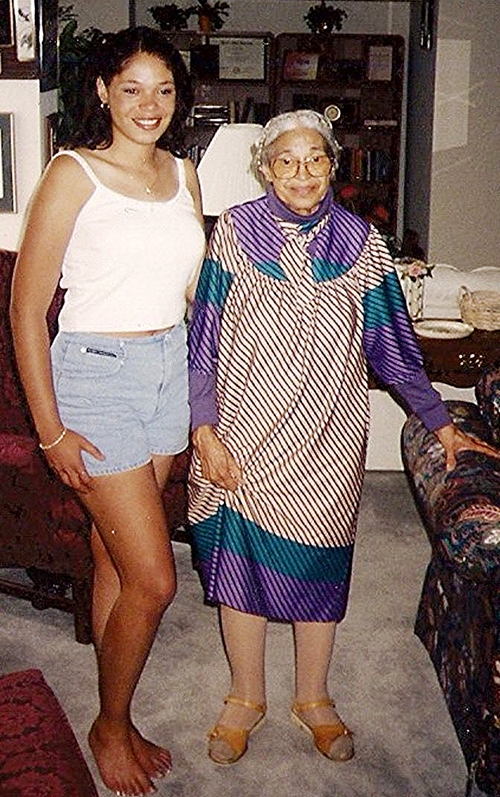
The niece and her aunt: "Instead of waiting for others, she took that leap."
Below is part of what she says in an "as told to" article by managing editor Liz Dwyer, who tweets that she's "so grateful to Parks' niece for telling me these stories." The presentation is timed to mark the 105th anniversary of Rosa Louise McCauley's birth on Feb. 4, 1913, in Tuskegee, Ala., to James and Leona McCauley.
My Auntie Rosa was not just a tired old lady who sat down on a bus one day. . . . I refuse to let her legacy be turned into a caricature.
I believe her story is more relevant than ever because she and people like her laid a foundation so that women today can be more vocal, can run for office, can demand equal rights and equal pay, and say we don’t have to be harassed.
I regularly give presentations to organizations and schools about how tirelessly my aunt worked for justice and how she’d been heavily involved in civil rights work long before she refused to give up that seat. . . .
Sometimes I struggle with social media because it seems there’s always somebody belittling Auntie Rosa.
I recently saw someone post that my aunt wasn’t really black. Or people say that she was strategically placed on the bus in Montgomery because she was lighter-skinned. It’s amazing to me that they would think that.
Yes, our family ancestry is part African American, part white, and part Native American. Auntie Rosa considered herself black and was treated as black. We have a lot of work to do in this country regarding colorism, but whether you’re light or dark — and this is still true today — you are black in America and you’re going to be treated accordingly. . . .
It still breaks my heart to remember my aunt telling me how many times it took for her to get registered to vote. Back then, they made black folks take a literacy test knowing that many couldn’t read or write. It was a trickle down effect of the lack of education for black people. But Auntie Rosa, she knew all the answers backwards and forwards, but year after year they denied her.
And finally it was a white woman in the office who said, just let her register to vote. My aunt had been persistent, showing up. "I’m here to take the test so I can get registered to vote."
And then I think about how, as soon as I turned 18, all I had to do is go sign a card. . . .
Today [Feb. 2], I’ll be visiting Rosa Parks Elementary School in Toledo, Ohio to talk about my aunt with the kids. We’ll have some cake, we’ll celebrate. And I’m going to tell them to remember that Rosa Parks was a regular citizen who, in her heart, felt like she should be doing something for change. Instead of waiting for others, she took that leap.


