
Prof. Marc Edwards
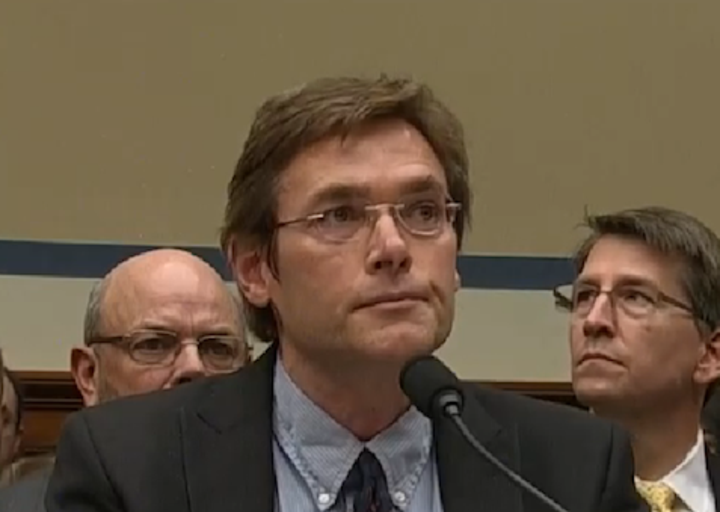
Prof. Marc Edwards
Virginia Tech scientist Marc Edwards didn't discover the ugly problem with the Flint water system, the New York Times points out.
It was LeeAnne Walters, a mother of four, who launched an investigation after her children broke out in rashes, writes free lance write and Wayne State University Professor Donovan Hohn in a lengthy, well-crafted profile in the Times on Edwards. In early 2015, Walters began investigating and got the city to conduct a test which showed dangerously high levels of lead in tap water.
The state tried to downplay it all. It wasn't until Edwards stepped up that it made a difference, writes Hohn.
Hohn writes that in December Flint’s newly elected mayor, Karen Weaver, presented Edwards with a commemorative plaque.
“We had cried out for a year and a half, and it wasn’t until you came that you gave our voice some validation,” she told him. “It wasn’t until you came, and we got those Virginia Tech results, that we knew: People couldn’t say we were crazy. They couldn’t say we didn’t know what we were talking about. They couldn’t say it was our imagination.”
Edward isn't your typical scientist.
Hohn reports:
Edwards’s decision to champion the cause of activists is not one scientists typically make; they avoid political controversies for a reason. This year, the American Association for the Advancement of Science, the largest scientific society in the world, published a report on the “standards, benefits and risks” of advocacy. “When scientists become advocates, they become ‘partisans’ and are no longer neutral conveyors of scientific information,” the report stated. “While the line between neutral and partisan, between dispassionate and passionate, is not easily drawn, it nonetheless exists.” Scientists who transgress that line tend to have their credibility impugned. Just ask the climatologists. Or think of Rachel Carson, who was a scientist with the United States Fish and Wildlife Service before she became an author. Upon the publication of “Silent Spring” in 1962, critics accused her of hysteria and Communism.
To read the entire profile click the link below.


