
In newspaper shop talk, "copy" refers to article texts -- or did when staffs were larger and standards were higher.
Now it can be part of a two-word keystroke description -- copy / paste -- that turns a publicity handout into an uncredited news item masquerading as staff-produced content.
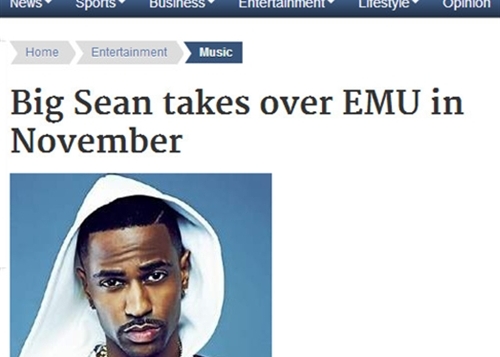
Seven paragraphs of an unchanged, unattributed press release appear under this Oakland Press headline.
Case in point: The Oakland Press, a shrunken survivor of two bankruptcies, "reports" on an upcoming Big Sean show by letting the promoter have the first word, last word and all the rest in between.
The Detroit rapper performs at Eastern Michigan University on Nov. 20, as a 255-word news release says. About half an hour after it was emailed to local journalists Friday, all but 19 words of the promotional pitch went on The Oakland Press website as seven paragraphs of purportedly original content.
Puffed-up prose
"Big Sean is one of the hottest hip-hop stars on the scene," readers are told as though that's a fact. The article puff post continues:
He now has millions of followers on Twitter and Facebook and over 46 million YouTube views. He has won praise from MTV, Rolling Stone, USA Today and the New York Times. They have called his music both “clever” and “confident.”
Hall of Fame, the second full-length album from Big Sean, . . . continues his rise to fame with Vibe calling it “pretty damn impressive.”
Posting a barely touched verbatim release isn't close to a plagiarism-level sin on any moral compass. Publicists want their prose to gain independent credibility as news content, after all.
But when newsrooms had more people and deadlines were measured in hours, releases generally got rewritten or served as starting points for original work that attributed quotes and other statements to the handout source.
Ethical erosion
The Oakland Press kisses that quaint practice good-bye by presenting the copy/paste concert announcement without a byline or reference to its origin, a practice media ethicists criticize as troublesome because it's not transparent.
While this example may seem benign, it's akin to letting an advertiser write unlabeled editorial content. It reflects an erosion that could spread as some media companies scramble to generate content with fewer journalists.
That's the case at the Pontiac-based suburban daily. After its parent company's second bankruptcy in three years, the downsized paper recently became owned by 21st CMH Acquisition Co. Editorial staff layoffs accompanied the change.
The Press last month published a Q&A with John Paton, chief executive of Digital First Media, which manages the group that it's in. The bankruptcy, he says, was part of a strategy to eliminate burdensome print-era costs.
"The process allowed the company to shed a bunch of legacy obligations it could never afford," Patton says, referring to pensions, long-term debt and leases. He didn't cite the obligations of gathering and presenting news the traditional way, rather than by posting free press releases, but perhaps that's an unspoken element of the digital streamlining.


