To neighbors and blues music fans, the Sunday gatherings organized by Albert "Pete" Barrow at John's Carpet House are "popular weekly outdoors blues jams in East Poletown," as a Deadline Detroit article put it last month.
To an urban scholar at the Hudson Institute policy center in Washington, D.C., they're that and something more significant -- a "scarce and desperately needed stirring of civic energy," writes William A. Schambra at a journal for the leaders of nonprofit organizations.
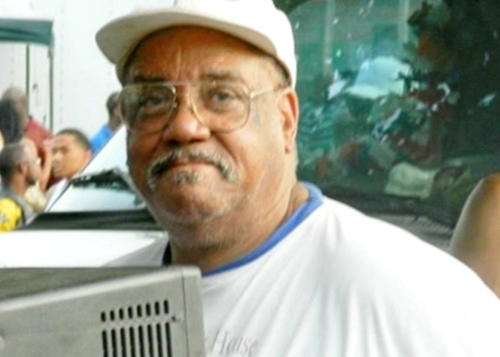
Albert "Pete" Barrow (Photo by Sandi Verschaeve)
Schambra, director of Hudson's Center for Philanthropy and Civic Renewal, notes that Detroit police blocked July 20 and 27 performances over a permitting issue and that music resumed Aug. 3.
Given its history, it’s probably just a matter of time before the city moves against John’s Carpet House again.
This will be bad news for those of us who are fans of civic institutions— not the towering, well-financed, professionally staffed nonprofits that are indistinguishable from government agencies or corporations, but the tiny, scruffy, all-but-invisible grassroots groups that assemble quietly (or with somewhat louder blues accompaniment) to build something that everyday citizens want in their own lives, in their own ways.
At a moment when we’re too inclined to regard voluntary activity as nothing more than the leisurely hours put in by the children of affluence in order to bolster their resumes, it’s useful to recall that for many Americans, volunteerism isn’t just a pleasantry or an afterthought. Rather, it’s the difference between flourishing and decline, the only way to pull themselves out of the despair so widespread in our central cities.
Nowhere has this proven to be truer than in Detroit. Far beneath all the high-flying financial wheeling and dealing now underway to pull it out of bankruptcy, and well outside the fortified enclaves along the riverfront that define the hip, high-tech “new Detroit” in the glossy magazines, everyday citizens have come together to make new lives for themselves in the face of decay so profound and so widely photographed that “ruin porn” has now entered our vocabulary.

William A. Schambra (C-Span photo)
In the Washington scholar's view, the tug-of-war over whether a Frederick Street blues party can take place on eight vacant lots reflects broader tensions over "building a 'new Detroit' while driving out the gritty, home-brewed institutions of the 'old Detroit.' "
Happily for grassroots civil society, though, new technologies allow everyday citizens to come together and resist the suppression of their DIY energies. Facebook provides a way for Pete Barrow to solicit donations for the Carpet House and to rally neighborhood support in the face of police hostility.
Local grad student and blues lover Danny Fenster has kept the attentive public apprised of its plight through his blog. The indispensable website Deadline Detroit, itself struggling to stay afloat, hosts Fenster’s writing.
For foundations that are enamored of results-driven grant-making, it would be easy to measure the impact of a contribution to the Carpet House to replace its portable toilet, and maybe even add one or two. For foundation leaders who insist that they don’t just give money, but also leverage influence, a few calls to City Hall on behalf of Pete Barrow and his fellow civic leaders would no doubt work wonders.
If foundations cannot act unless it be in pursuit of some grand strategic scheme, they can categorize these efforts under “renewing civic life.”
-- Alan Stamm
Related coverage at Deadline Detroit:


