
(No caption)
The Shell Eco-marathon, which attracts about 1,000 students from North and South America to race experimental high-efficiency vehicles along the riverfront and around downtown, runs from Friday to Sunday.
Held annually in the U.S, Europe, and Asia, the Shell Eco-marathon is a unique competition that challenges students around the world to design, build and drive the most energy-efficient cars around the streets of downtown Detroit, according to a press release.
Last year's winners, a University of Toronto, achieved an astonishing 3,421 miles per gallon of gasoline, the Free Press reports..
The free event is at Cobo Center. For information, call (313) 877-8777.
Here's how it works, according to the website:
Vehicle classes
The competition is split into two classes or categories. The Prototype class focuses on maximum efficiency, while passenger comfort takes a back seat. The UrbanConcept class encourages more practical designs. Cars are also divided by energy type:
Internal combustion engine fuels include petrol, diesel, liquid fuel made from natural gas and ethanol.
In the electric mobility category, vehicles are powered by hydrogen fuel cells and lithium-based batteries.
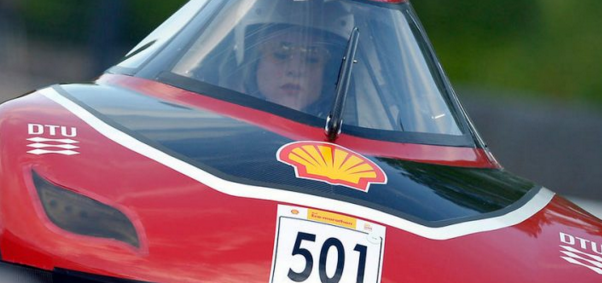
Mileage competition
Over several days, teams make as many attempts as possible to travel the furthest on the equivalent of one litre of fuel.
Cars drive a fixed number of laps around the circuit at a set speed. Organisers calculate their energy efficiency and name a winner in each class and for each energy source.
Off-track awards recognize other achievements including safety, teamwork and design.
The competition inspires the engineers of the future to turn their vision of sustainable mobility into reality, if only for a few days. It also sparks passionate debate about what could one day be possible for cars on the road.
The competition dates back to 1939 when Shell Oil Company employees in the USA made a friendly wager over who could travel furthest on the same amount of fuel. Since then it has expanded to two more continents, includes many energy types and sparks passionate debate around the future of energy and mobility.
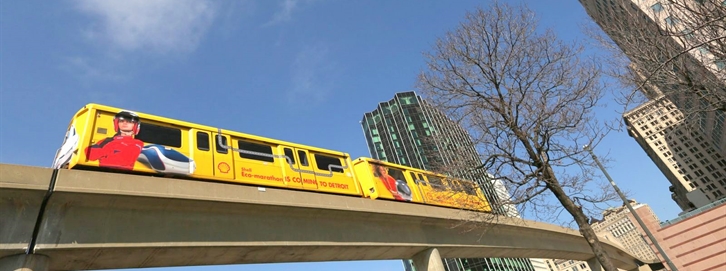
People Mover graphics promote the three-day event.