
(No caption)
Valerie Vande Panne, a former Metro Times editor (2014-15), isn't the first to declare Detroit's supposed comeback a myth.
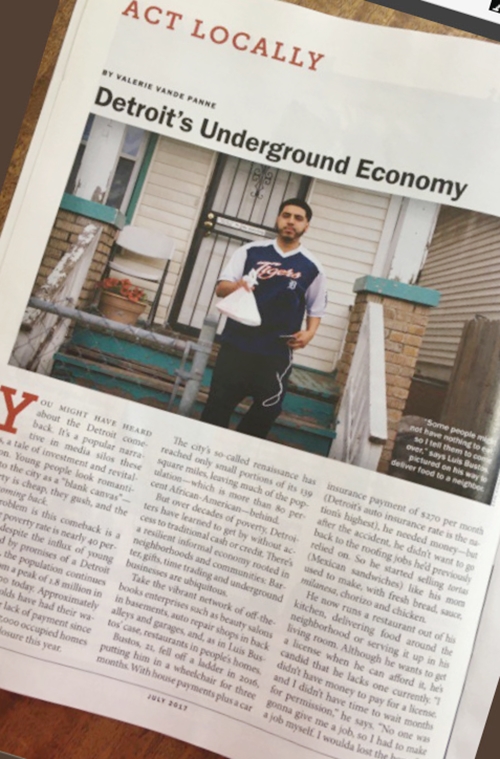
The new article is in July's issue of a monthly magazine focusing on social, environmental and economic justice.
But she goes a step further, writing in the national magazine In These Times about Detroit's underground economy -- which operates out of necessity for the many in the city who have not benefited from the much touted "comeback."
The same writer addressed this topic five months ago at Bloomberg News, chronicling "what experts call a gift economy."
[It] is an alternative economy based on time banking, skill-sharing, and giveaways—home-grown vegetables, a roof repair, spare keys to a shared car—in which neighbors give as they can and take as they need.
It’s a currency of community that has helped Detroit’s poor survive without ready cash. And those who rely on it say it has helped strengthen communities throughout America’s poorest big city.
In the July issue of In These Times, which has focused on social, environmental and economic justice since 1976, Vande Panne writes:
The city’s so-called renaissance has reached only small portions of its 139 square miles, leaving much of the population—which is more than 80 percent African-American—behind.
But over decades of poverty, Detroiters have learned to get by without access to traditional cash or credit. There’s a resilient informal economy rooted in neighborhoods and communities: Barter, gifts, time trading and underground businesses are ubiquitous.
Take the vibrant network of off-the-books enterprises such as beauty salons in basements, auto repair shops in back alleys and garages, and, as in Luis Bustos’ case, restaurants in people’s homes.
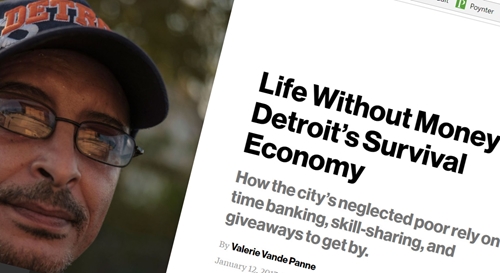
The past Metro Times editor first explored "the currency of community" Jan. 12 at Bloomberg News.
Bustos, 21, injured himself by falling off a ladder. Instead of returning to his job as a roofer, he started selling Mexican sandwiches called tortas, just like his mom made, with fresh bread, sauce, milanesa, chorizo and chicken.
Now, he runs a restaurant out of his kitchen through word of mouth and social media. He delivers the food and serves up some in his living room. He wants to get a license, but can't afford one.
“I didn’t have money to pay for a license, and I didn’t have time to wait months for permission,” he tells Vande Panne. “No one was gonna give me a job, so I had to make a job myself. I woulda lost the house.”


