

(No caption)
Two national columnists cite Stephen Henderson's dismissal by the Detroit Free Press as a step too far amid widening responses to workplace sexual harassment.
"A zero-tolerance approach . . . may sound admirable, but it’s legally unworkable and, in many cases, simply unjust," Bret Stephens of The New York Times writes in a column that mentions Henderson's punishment last Friday. "Does this behavior really merit professional decapitation?”
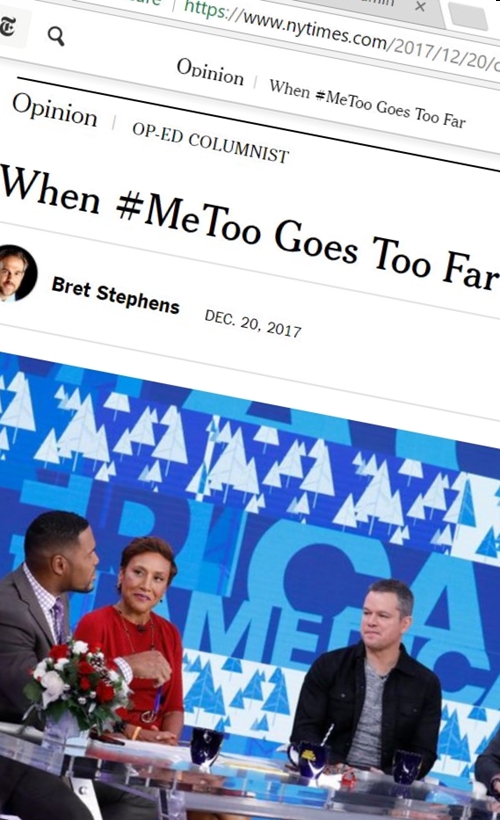
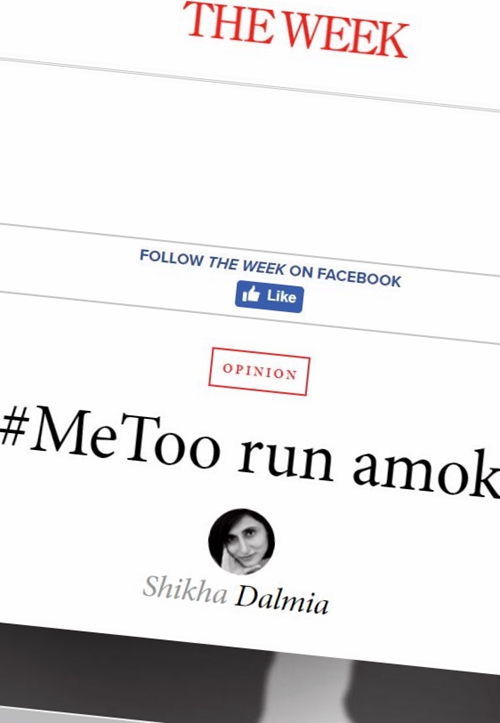
A new commentary in The Week magazine makes the same point under a similar headline. "When #MeToo Goes Too Far" it says atop The Times' column. "#MeToo run amok" is the head on Shikha Dalmia's column (excerpts below).
"Do companies really have the resources, or the right, to police and adjudicate the private behavior of their employees?" Stephens asks in Thursday's column. Three paragraphs focus on the Detroit discipline:
What about Stephen Henderson, the Pulitzer Prize-winning Detroit Free Press columnist and editorial page editor (and an acquaintance of mine) who was recently sacked from his job?
Henderson is not accused of sexual assault. He is widely admired as a pillar and champion of his hometown. And Henderson has apologized for his behavior, which he said happened years ago and involved "sexually themed conversations” with a coworker outside of work along with a couple of rejected passes at a woman working in another department.
Does this behavior really merit professional decapitation? Wouldn’t the apology, plus, say, a monthlong suspension, have sufficed? Don’t we have the moral capacity to distinguish between aggressive sexual predation and run-of-the-mill romantic bungling — between a pattern of abusive behavior and a good man’s uncharacteristic bad moments?
Original article, Wednesday afternoon:
A magazine commentator sees Stephen Henderson, the Detroit Free Press' recently dismissed opinion pages editor, as part of a national purge "that thoughtlessly and reflexively throws decent men under the bus."

Shikha Dalmia thinks the current climate "spooked the Freep so much that it wanted to take no chances" in Stephen Henderson's case. (Facebook photo)
Shikha Dalmia, writing in The Week, backs the underlying intent of "the very worthy #MeToo movement against sexual harassment and abuse." But the West Bloomfield policy analyst, a Detroit News editorial writer in the mid-1990s, adds:
Henderson was fired for "inappropriate behavior" — even though no women actively complained about it — that allegedly violated the newspaper's "zero tolerance policy." But if this standard — both too vague and too strict — is going to be religiously enforced on workplace interactions in the post-Harvey Weinstein era, few men — or, women, for that matter — will ever feel safe in their jobs.
The essay is posted Wednesday by the British newsweekly's U.S. edition. Dalmia, a 1994 Michigan State alumna, is a senior policy analyst at Reason Foundation, a nonprofit think tank advocating free markets. She contributes regularly to national media and knows Henderson as a fellow Detroit commentator and as a WDET host who "occasionally invites me to spar."
Dalmia believes "Henderson's travails began when he ran an editorial at the Freep [on Nov. 21] calling on Democratic Rep. John Conyers to resign" over sexual harassment accounts by ex-staffers and payment of $27,000 in public money to settle get one woman to back off.
Henderson's editorial incensed some of Conyers' local supporters, including Rev. W.J. Rideout III, a local firebrand, who accused Henderson of sexual harassment.
Rideout offered no names of victims or substantiation or details. . . .Still, his allegations triggered an internal probe by the Freep. . . .
The Freep's fishing expedition eventually turned up two interactions that HR decided were inappropriate. Both occurred in social situations outside of the workplace. . . . neither woman, according to Henderson, ever filed a complaint against him or even wanted the company to take any action, a version of events that Freep and its parent company, Gannett, has not disputed.
Her takeaway: "The flimsy accusations — and the process that led to their airing — make Henderson's firing seems like a massive overreaction."
The Oakland County writer, aware that she leans into a strong wind of change, embraces the goal of "a comfortable work environment free from harassment" and acknowledges:
Sexual harassment is a serious issue, especially in the workplace. . . .
A responsible reckoning to hold genuine monsters accountable is something that women do indeed need.
What women and society don't need are punishments gone wild, Dalmia believes:
The Freep launched an investigation based on allegations by an unaffected outside party with a grudge — not any of the women involved. And the women who its investigation did finally fetch up, as best as one can tell, demanded no action against Henderson. It's no wonder that Henderson is now exploring a lawsuit.
All of this suggests that the climate of censoriousness that #MeToo has generated spooked the Freep so much that it wanted to take no chances. But there is something quasi-totalitarian when a company starts going after employees for victimless behavior that has been retroactively branded as inappropriate. It might also end up targeting women who engage in "sexually themed" conversations — replacing the fear of sexual harassment with that of HR inquisitions.
Henderson's plight is the clearest case yet of #MeTooism run amok.


